The Clave Rhythm Explained
The five-beat key to salsa. Clave is the five-stroke pattern that holds salsa together. Learn the son clave, the 3-2 and 2-3 directions, and how dancers use it to stay on time.
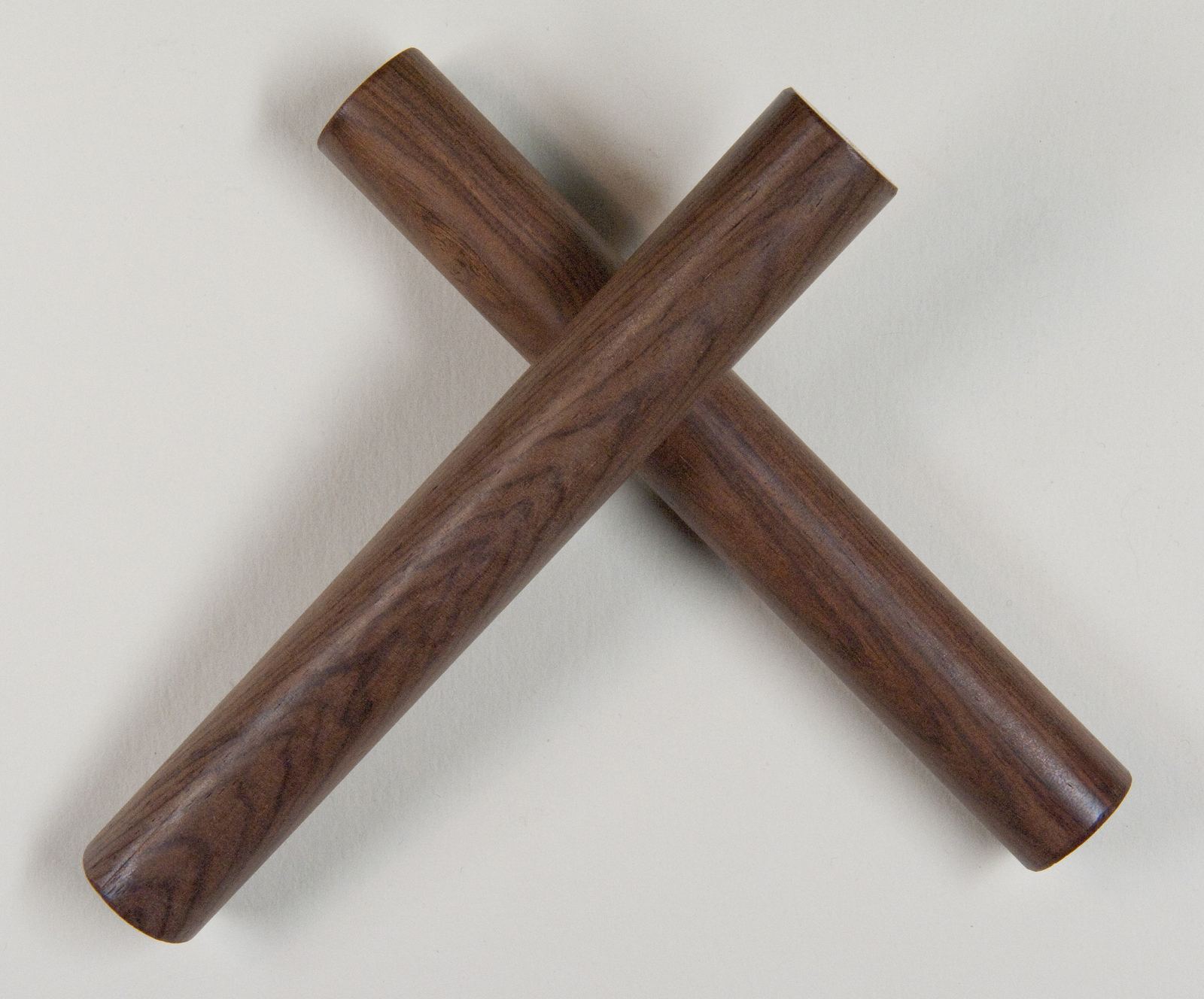
A pair of claves: Hannes Grobe (talk), CC BY 3.0
Key and keystone
Clave means key in Spanish, and also the keystone that holds an arch together. In Cuban music it names both a pair of wooden sticks and the rhythm they play. Even when nobody is holding the sticks, the pattern runs through the bass, piano, percussion and vocals, and musicians talk about being in clave or crossed against it.
The rhythm comes from Afro-Cuban traditions, and the same five-stroke shape appears in many West African bell patterns.
Video: Clave Explained / Son, Rumba, 3-2, 2-3 and more (WORLD DRUM CLUB), embedded from YouTube.
Counting son clave
Son clave stretches across two bars of four beats, eight counts in salsa terms. In the 3-2 direction, the first bar has three strokes, on 1, the and of 2, and 4, which feels like a quick 'one, two-and, four'. The second bar has two strokes, on 2 and 3.
Flip the bars and you get 2-3 clave, which starts with the two-stroke side. A song is written in one direction or the other, and arrangers keep every part aligned with it.
Musicians say a song is in 3-2 or 2-3 based on how the melody and the montuno sit against the pattern. Dancers do not need to name the direction, but feeling which bar carries three strokes helps you sense where a phrase begins.
Rumba clave
Rumba clave is a close cousin. The third stroke of the three-side is delayed by half a beat, landing just after 4. That small shift adds tension and a rolling, more African feel, and it is common in rumba and in some modern salsa and timba.
Why dancers should care
You do not need to play claves to benefit. Clapping the pattern while you listen trains your ear to hear the phrase, so you know where 1 is even when the melody pauses. Many teachers have students clap clave over a song, then step the basic underneath it. Once the two lock together, timing stops being a guessing game and starts to feel like gravity.
A good practice drill: play a classic salsa track, clap clave for one full minute, then switch to tapping your foot on 1 and 5 while you keep the pattern in your head. Next, try a few basics while a friend claps clave. When the pattern stops feeling like an extra task and starts feeling like part of the song, you have found the key.
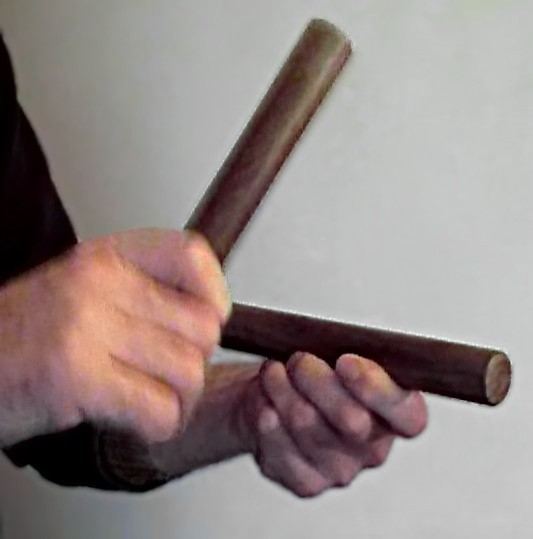
Facts on this page were checked against these sources.
- A pair of claves: Hannes Grobe (talk), CC BY 3.0
- How to hold claves: Freddythehat at English Wikipedia, Public domain
Text written by Salsa Tranquila.